
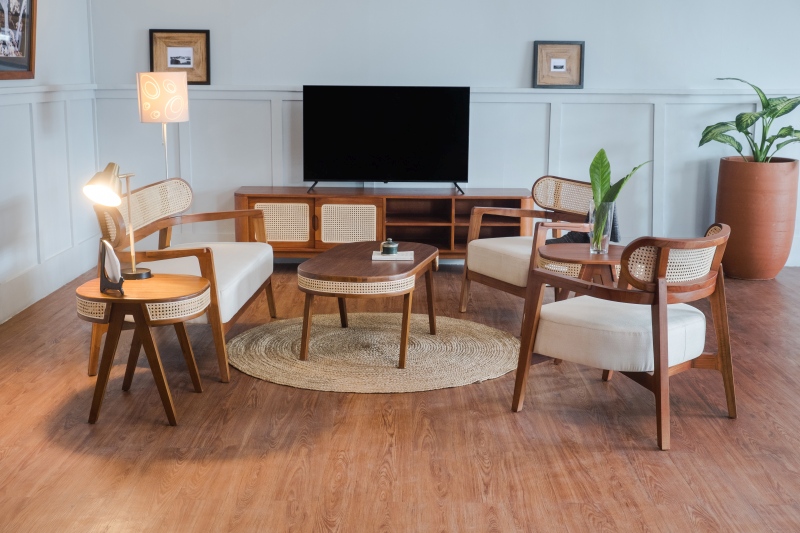
For B2B buyers, the primary challenge of importing timber products is ensuring they survive the transition between different global climates. Indonesian teak indoor furniture is engineered to meet these rigorous demands through precise moisture control. Before a single cut is made, the raw lumber undergoes an extensive kiln-drying process to reach an equilibrium moisture content of 8% to 12%. This technical precision is what prevents the wood from warping or splitting when it moves from the humid tropics to a dry, climate-controlled apartment in London or New York. By choosing Indonesian teak indoor furniture, international distributors can confidently offer a product that maintains its structural integrity under diverse environmental stressors.

The construction of premium Indonesian teak indoor furniture relies on traditional joinery techniques that have been refined by modern engineering. Mortise and tenon joints, reinforced with high-grade industrial adhesives, ensure that tables and chairs can withstand heavy use in hospitality settings without loosening. To provide a modern aesthetic edge, many export-ready designs now incorporate a mix of natural materials. For instance, the inclusion of hand-woven rattan panels in cabinet doors or bed frames adds a lightweight, breathable quality that complements the solid strength of the teak. This synergy between “hard” and “soft” materials is a hallmark of the “organic modern” style that is currently trending in high-end global markets.

Entrust your outdoor and hospitality projects to an international-standard teak furniture manufacturer. Contact our team for design solutions, technical details, and export proposals at marketing@rodajati.id or WhatsApp (+62) 851 8907 1994.